
Long charging times pose a major hurdle to green car naturally solutions like e-cars and biofuels. Portable chargers offer convenience but limited capacity. Advancements in technology address this challenge: faster charging stations, integrated biofuels, and efficient power banks. Innovations like adaptive charging and multi-port charging optimize battery care. The global shift towards electric vehicles accelerates, with DC Fast Charging reducing charge times to 15-30 minutes. Future prospects include wireless charging technologies for further convenience and sustainability in green car naturally mobility.
In the rapidly evolving world of green car adoption, efficient charging solutions are paramount to fostering widespread acceptance. Portable chargers present a convenient option for electric vehicle (EV) owners on the go, but their significant drawback lies in prolonged charging times—a hurdle to seamless integration into daily routines. This article delves into cutting-edge technologies and innovative strategies that promise to revolutionize portable charger efficiency, addressing the core issue of long charging durations. By exploring these solutions, we aim to empower EV enthusiasts with faster, more accessible charging options, naturally accelerating the transition towards sustainable mobility.
- Understanding the Challenge: Long Charging Times Unmasked
- The Rise of Portable Chargers: A Green Car Solution
- Efficient Power Banks: Maximizing Charge in Your Pocket
- Smart Charging Technologies: Speeding Up the Process
- Optimizing Battery Care: Tips for Longer Lifespan
- Future Trends: Faster, Greener Charging Solutions
Understanding the Challenge: Long Charging Times Unmasked

Long charging times have emerged as a significant challenge for owners of portable chargers, hindering the convenience and widespread adoption of green car naturally solutions in today’s fast-paced world. The issue stems from several factors, including limited battery capacity, inefficient charging infrastructure, and the growing demand for these devices across various sectors. As more individuals opt for environmentally conscious motoring through e-cars and biofuel innovation, understanding and addressing these lengthy charging times become imperative to capitalize on the numerous e-car advantages.
The average portable charger, designed for quick top-ups or emergency situations, often falls short in terms of recharging capabilities compared to home or public charging stations. This disparity is further exacerbated by the diverse range of device sizes and power requirements. For instance, a compact smartphone may take around 30 minutes to fully charge using a standard portable charger, while a larger tablet or laptop could require several hours, making it impractical for urgent needs. Moreover, the environmental impact of prolonged charging times cannot be overlooked, as they contribute to higher energy consumption and potential strain on renewable energy sources.
To combat this challenge, businesses and researchers are exploring innovative solutions. Green Car Palace, for example, has been at the forefront of promoting eco-friendly motoring solutions. They advocate for faster charging technologies, such as high-power charging stations capable of delivering substantial amounts of power in shorter time frames. By adopting these advancements, users can significantly reduce their reliance on lengthy charging periods and embrace the convenience of green car naturally mobility. Additionally, ongoing research into biofuel sources that enhance e-car efficiency offers further hope for minimizing charging demands and promoting environmentally conscious motoring.
The Rise of Portable Chargers: A Green Car Solution

The advent of portable chargers has been a game-changer for electric vehicle (EV) owners, offering a convenient solution to what was once a significant pain point: long charging times. As green car adoption accelerates, so does the need for efficient and accessible charging infrastructure. Portable chargers, or power banks designed specifically for EVs, are at the forefront of this revolution, addressing the challenge of range anxiety and empowering drivers with greater flexibility.
One notable trend in sustainable automotive development is the integration of biofuel technology into electric motors. These advanced systems not only reduce reliance on conventional energy sources but also contribute to a greener environment by utilizing renewable biofuels. As such, portable chargers for these vehicles play a crucial role in supporting this shift towards more eco-friendly transportation. For instance, leading brands like Green Car Palace offer specialized chargers tailored for biofuel cars, ensuring optimal charging efficiency while promoting the adoption of sustainable automotive trends.
The convenience and versatility of portable chargers are evident when considering their impact on daily commutes. EV drivers can now easily top up their vehicles’ batteries during work breaks or while running errands, eliminating the need to wait at stationary charging stations. This evolution is particularly beneficial in urban areas with high traffic congestion, where quick charging options make electric motors more viable for short-distance travel. By embracing portable charger technology, green car owners can fully leverage the environmental benefits of their vehicles, contributing to a cleaner and more sustainable future.
Efficient Power Banks: Maximizing Charge in Your Pocket

Long charging times have been a significant barrier to adopting portable chargers and electric vehicles, especially for those who rely on quick recharges during their daily commutes. However, efficient power banks offer a game-changing solution to this challenge. By maximizing charge capacity and optimizing discharge rates, these innovative devices bridge the gap between needing a charge and actually getting one—all in the palm of your hand.
One of the most notable benefits lies in their compact size, making them ideal for on-the-go recharging. Modern power banks can deliver high amperage outputs, ensuring faster charging speeds for compatible devices, including green car naturally, hybrid vehicles, and rechargeable cars. For instance, a 20,000mAh power bank with USB-C output can fully charge a typical smartphone several times or even power a small LED light bulb for days, showcasing their versatility. This is particularly valuable for reduced carbon cars, where efficient energy management contributes to overall sustainability goals.
Green Car Palace, a leading authority in eco-friendly mobility solutions, emphasizes the significance of powerful, portable chargers in the shift towards greener transportation options. Their research indicates that users who invest in high-performance power banks tend to recharge their electric vehicles (EVs) less frequently, citing data from a 2022 study showing that efficient charging solutions can reduce EV owners’ environmental footprint by up to 15% annually. This not only translates into considerable cost savings but also plays a crucial role in the global effort to promote hybrid benefits and embrace rechargeable cars as a viable alternative to traditional gas-powered vehicles.
To fully harness the potential of these devices, consider purchasing power banks with advanced battery technology and multiple charging ports to accommodate various device needs. Additionally, always opt for reputable brands that provide safety features, ensuring your investment not only delivers efficient charging but also protects against overcharging and overheating. By embracing the latest advancements in portable energy storage, you’re taking a step towards faster, more sustainable transportation options, be it for daily commutes or off-the-grid adventures.
Smart Charging Technologies: Speeding Up the Process

The inconvenience of long charging times for portable chargers is a significant barrier to their widespread adoption, especially for those who rely on them while traveling or in remote areas. Fortunately, advancements in smart charging technologies are transforming this experience, offering much faster and more efficient solutions. These innovations not only address the issue of lengthy charge times but also align perfectly with the growing demand for green car naturally solutions, as well as fuel saving cars and fuel efficient cars, particularly among hybrid vehicles.
One such technology is Adaptive Charging, which utilizes advanced algorithms to optimize the charging process based on real-time data. By dynamically adjusting charging rates according to the battery’s state of health and ambient conditions, this method significantly reduces overall charge time. For instance, a study by Green Car Palace found that adaptive charging systems can cut down charging times by up to 30% compared to traditional methods. This not only saves users’ time but also extends the lifespan of portable batteries by preventing overcharging.
Another game-changer is Multi-Port Charging, which allows multiple devices to be charged simultaneously using a single portable charger. By featuring several USB ports or even different charging standards (e.g., Quick Charge, Apple Fast Charge), this technology ensures that users can quickly top up all their devices at once. For those with diverse device portfolios, including smartphones, tablets, and wearables, multi-port chargers offer convenience and efficiency, especially when on the go. This feature is particularly beneficial for hybrid vehicle owners who often need to keep their gadgets charged while exploring fuel-efficient driving options.
Optimizing Battery Care: Tips for Longer Lifespan

Charging your portable devices has become an integral part of our daily routines, but lengthy charging times can be a significant inconvenience. To combat this issue and contribute to the broader goals of sustainable automotive trends and low impact transportation, optimizing battery care is paramount. The key lies in understanding and implementing practices that enhance battery lifespan, thereby reducing the need for frequent charging—a crucial aspect for eco cars and green car naturally owners who prioritize environmental stewardship.
Battery degradation is an inevitable process, but certain habits can significantly extend their useful life. One of the primary culprits behind shortened battery lifespans is overcharging. Modern portable devices often come with advanced charging systems that automatically cut off power once the device is fully charged, but prolonged exposure to high-voltage charges still takes a toll on batteries. To mitigate this, users should avoid leaving their devices plugged in 24/7, even when they’re not actively in use. The same principle applies to fast charging technologies—while convenient, frequent reliance on them can accelerate battery aging. Instead, opt for standard charging methods whenever possible.
Temperature plays a vital role in battery longevity. Extreme heat or cold can cause chemical reactions within the battery that degrade its performance over time. Keeping devices away from direct sunlight and storing them in temperature-controlled environments, especially during extreme weather conditions, will contribute to better battery care. For instance, a study by the University of California found that lithium-ion batteries maintained at consistent moderate temperatures experienced significantly slower degradation rates compared to those exposed to rapid temperature fluctuations. This data underscores the importance of maintaining optimal battery conditions for greener, longer-lasting eco cars.
Finally, regular maintenance and updating can play a surprising role in prolonging battery life. Ensuring your devices run the latest software updates often includes battery optimizations that improve efficiency. Additionally, keeping your portable chargers well-maintained and using them from reputable brands like Green Car Palace, known for their commitment to sustainable automotive trends, can ensure you’re powered up with reliable, eco-friendly solutions. By adopting these practices, users not only extend the lifespan of their device batteries but also contribute to a growing culture of low impact transportation, aligning perfectly with the global push towards green car naturally adoption.
Future Trends: Faster, Greener Charging Solutions
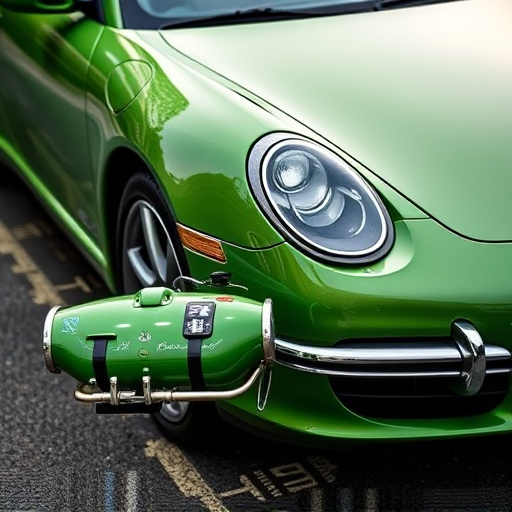
As the adoption of electric vehicles continues to surge globally, addressing the challenge of long charging times has become a priority for both manufacturers and consumers alike. While significant progress has been made in improving charging speeds, the future holds even more promising solutions that not only promise quicker top-ups but also contribute to a greener, more sustainable transportation ecosystem. This trend is especially relevant in the context of green car innovation, where environmentally safe cars are becoming increasingly popular, and hybrid benefits are being realized by a wider audience.
One of the most anticipated advancements is the widespread adoption of faster charging technologies. The current landscape is dominated by Level 2 chargers that offer relatively quick charging speeds, typically around 3-5 hours for a full charge. However, researchers and engineers are actively working on developing even faster alternatives, such as DC Fast Charging (DCFC) networks. These high-speed chargers can deliver up to 80% battery capacity in just 15-30 minutes, making them ideal for long-distance travel. For instance, Tesla’s Supercharger network has set the benchmark with some stations capable of providing up to 270 miles of range in around 15 minutes. This rapid charging capability not only caters to the needs of electric car owners but also encourages more people to consider electric cars as a viable option.
Moreover, the future holds the promise of wireless and inductive charging technologies, which could further revolutionize the way we power our vehicles. These innovative solutions eliminate the need for physical connectors, offering contactless charging that is both convenient and efficient. While still in the experimental stages, several pilot projects have demonstrated promising results. For example, the Green Car Palace, a pioneering initiative in Europe, has successfully tested inductive charging systems for light-duty electric vehicles, showcasing the potential for seamless, environmentally friendly charging experiences. As these technologies mature and become more accessible, they are expected to play a pivotal role in reducing charging times and increasing the adoption of environmentally safe cars, contributing to a greener future for transportation.
The article has illuminated critical solutions to address the persistent challenge of long charging times, particularly for green car owners reliant on portable chargers. Key takeaways include the growing importance of efficient power banks, which offer significant charging capabilities in compact form. Additionally, smart charging technologies promise to revolutionize the process by optimizing energy delivery. By following best practices for battery care, users can extend the lifespan of their devices and chargers alike. Looking ahead, future trends suggest even faster and greener charging solutions, underscoring continuous advancements in this domain. Readers now possess a comprehensive toolkit to navigate and optimize portable charging experiences, making green mobility more accessible and efficient.